Virtual Reality Training for Operators by Linde

Virtual Reality for industrial plants: Linde Engineering uses digital twins of its plants to train operating personnel before the plant is even built. The virtual reality experience allows customers to get familiar with the plant topology, as well as training critical procedures. Please get in contact with [email protected] for your questions.

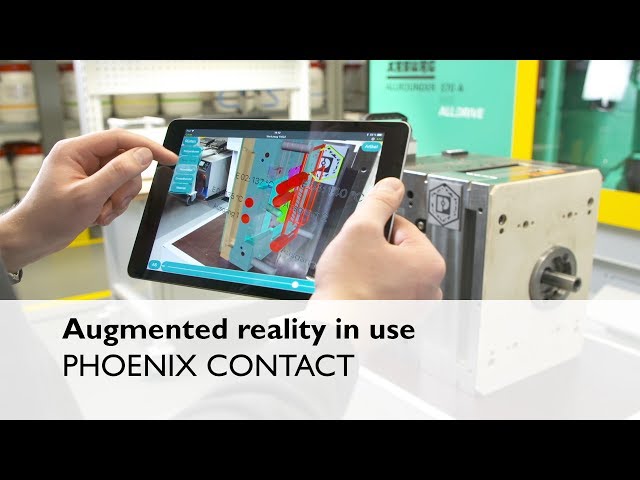
Augmented reality in use for industry 4.0 and building technology

▶ Augmented reality facilitates processes in industrial automation and building automation and forms the basis for digitalization. ▶ AR systems can be used in the facility management as well as in in-house tool shops for optimizing processes and reducing the error rate. In in-house tool shops the networking of all machines and tools in production can reduce the setup times of injection molding systems. Every workspace offers access to tool data and databases with animations and 3D models on every tool. ▶ In the facility management AR data are used by the building management system Emalytics from Phoenix Contact for the optimal management of your processes. Thanks to the intelligent networking of the entire building technology, every user has access to the right information at the right time. ▶ For more information about our building automation solutions check out our website: https://phoe.co/BuildingAutomation ▶ Subscribe to our YouTube channel to receive the latest news & updates: https://phoe.co/subscribe

Imagery-Assisted Virtual Reality for Athletic Training

Lindsay Ross-Stewart, PhD, is the leading researcher of imagery-assisted virtual reality in both athletics and medicine. As part of her applied research at Southern Illinois University Edwardsville, she worked with the Cougars baseball team to study how athletes can use imagery-assisted virtual reality to increase their confidence and performance. The program required athletes to watch video of themselves via a smart phone application in virtual reality goggles, and practice a guided imagery script as many as three times a day. Results showed significant changes in the players’ psychological practice skills, including automaticity, relaxation, self-talk and imagery, as well as psychological performance skills. Subscribe now ➤ http://bit.ly/2kaiL2U For more great content from the Higher Education Channel check us out at: INNOVATIONS: http://www.hectv.org/watch/innovations HEC-TV, Higher Education Channel: http://www.hectv.org Facebook ➤ http://bit.ly/1WPZEek Twitter ➤ http://bit.ly/22qZDNU Instagram ➤ http://bit.ly/1THSOnM Kathleen Berger Executive Producer, INNOVATIONS https://twitter.com/kathleen_berger https://www.facebook.com/Kathleen-Berger-148305515248926

Advance surgical training with virtual reality | Justin Barad | TEDxBerkeley

The surgical training system is broken and outdated. Despite the incredibly long and intense training periods required for surgical residents, many surgeons are underprepared for the cases they see. Dr. Justin Barad shows how we can give surgeons in-depth, hands-on training using virtual reality to help prepare them for operations and procedures. Justin Barad, MD is the co-founder and CEO of Osso VR, a clinically validated and award-winning surgical training platform. Early in Dr. Barad’s career, he fully intended to become a game developer, but when a family member became ill he decided to use his technology background to solve healthcare challenges and moved toward medicine. With a strong interest in “serious gaming” and a first-hand understanding of the challenges facing residents and experienced doctors, he co-founded Osso VR with a mission to democratize access to modern surgical techniques and improve patient safety. This talk was given at a TEDx event using the TED conference format but independently organized by a local community. Learn more at https://www.ted.com/tedx

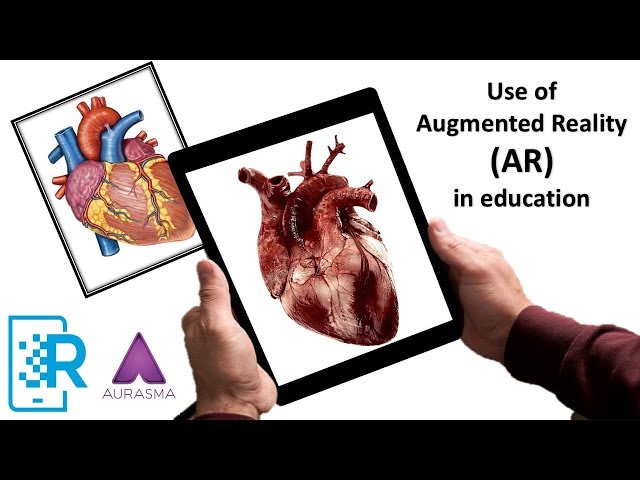
Use of Augmented Reality in Education

Augmented reality (AR) is a direct or indirect live view of a physical, real-world environment whose elements are "augmented" by computer-generated perceptual information, ideally across multiple sensory modalities, including visual, auditory, haptic, somatosensory, and olfactory. This Video demonstrate the fascinating use of Augmented Reality in educational field especially like biology with the use of AR App called HP Reveal (previously called Aurasma) on Smartphones and Tablets. HP Reveal App links- For Android: https://play.google.com/store/apps/details?id=com.aurasma.aurasma&hl=en For iPhone/iPad/iPod: https://itunes.apple.com/in/app/hp-reveal/id432526396?mt=8 HP reveal/ Aurasma Homepage: https://www.aurasma.com/ Follow My Aurasma/HP Reveal account: http://auras.ma/s/hBOmx & http://auras.ma/s/tC63A Video gear: iPhone 7 Camera: Sagar Kadam & Pratik Tiwari

Virtual Reality as a Form of Medicine

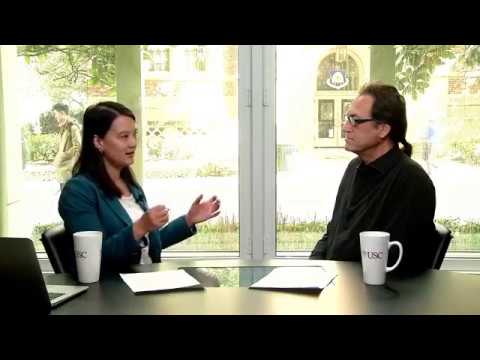
Visit USC on YouTube: https://www.youtube.com/user/USC/ Learn more about the University of Southern California: https://www.usc.edu Watch Judy Pa of Laboratory of Neuro Imaging (LONI) at Keck Medicine of USC and Skip Rizzo of USC Institute for Creative Technologies discuss the use of virtual reality (VR) and artificial intelligence (AI) to rewire our brains so we can stay healthy. This was originally broadcasted via a Facebook Live broadcast on USC’s Facebook page: https://www.facebook.com/usc/

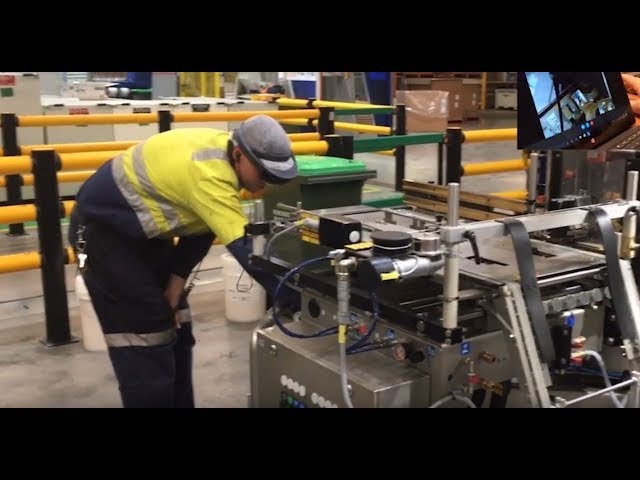
Example of the use of augmented reality in manufacturing

Asahi Beverages is using augmented reality glasses to allow almost instant access to specialist support when production equipment breaks down in remote locations. Previously, technical specialists would often need to fly out to fix remote issues – an enormously expensive delay in a process where minutes of downtime count as many dollars in lost production. Now, local operators supply the eyes and the physical presence, with specialist expertise supplied remotely. On the back of estimated savings from the pilot, Asahi is enthusiastically expanding the technology to other locations.

CAE VimedixAR with Microsoft HoloLens Augmented Reality

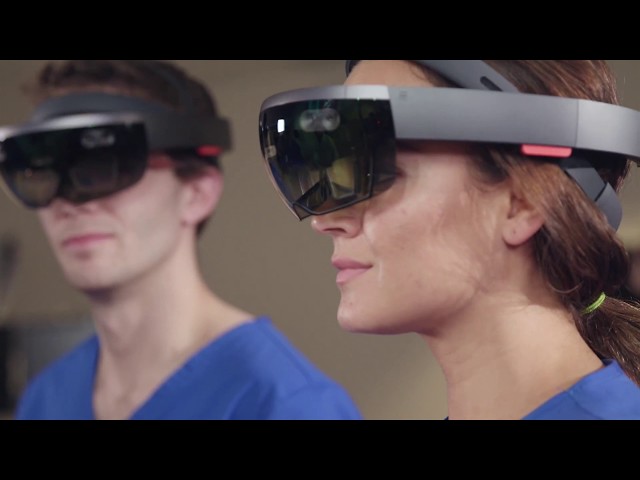
The CAE VimedixAR ultrasound simulator leaps to life with the addition of the Microsoft HoloLens module. Now, healthcare learners can display, enlarge, turn, and rotate realistic-looking anatomical parts, or command them to return into the manikin body in an #augmentedreality medical education training environment. Learn more about #VimedixAR with Microsoft HoloLens at https://caehealthcare.com/hololens Tell us what you think!

Mixed reality in the classroom

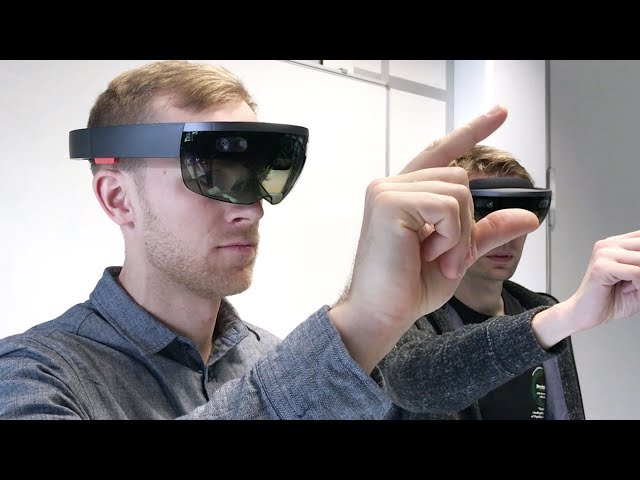
Brand new technology in the classroom: students immerse themselves in a “mixed reality” and use HoloLens glasses to learn a fundamental principle of proteins. The HoloLenses are used in a Computer-Assisted Drug Design course at ETH Zurich run by Gisbert Schneider, Professor in the same named field. Read more: https://www.ethz.ch/en/news-and-events/eth-news/news/2018/02/hololens.html What the colours stand for: White: hydrogen Skin tones: carbon Yellow: sulphur Red: oxygen Blue layer: 1.4-angstrom surface that is produced by moving a water molecule over the surface of the protein. The water molecule has a diameter of 1.4 angstroms. Red layer: 6-angstrom surface that is produced if you take a probe with a diameter of 6 angstroms. - - - ETH Social Media Links: Facebook: https://www.facebook.com/eth/ Instagram: https://www.instagram.com/ethzurich/ Twitter EN: https://twitter.com/eth_en LinkedIn: https://www.linkedin.com/school/eth-zurich/ https://www.ethz.ch

Scroll to top

By continuing to use the site, you agree to the use of cookies. more information

The cookie settings on this website are set to "allow cookies" to give you the best browsing experience possible. If you continue to use this website without changing your cookie settings or you click "Accept" below then you are consenting to this.

Close