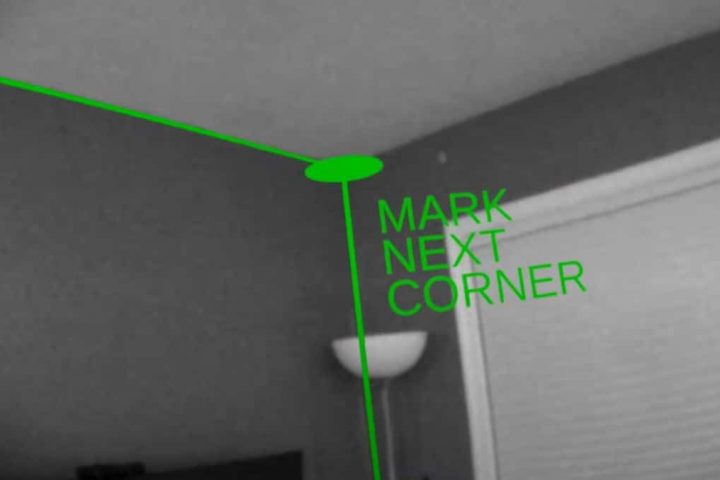

Ahead of any official announcement, Lenovo’s upcoming Daydream standalone headset was recently approved by the FCC, suggesting the company is gearing up for launch soon.
First discovered by Lets Go Digital, the FCC test report (seen below) reveals little about the headset. Besides the name ‘Lenovo Mirage Solo’ and a confirmation of its place in the Daydream app ecosystem, the only spec-related info found in the test report concludes the EUT (equipment under test) contains a 4,000 mAh battery and support for Bluetooth 5.0. The EUT was an identical prototype to the production model however, suggesting the specs published here are indeed final.

Back at Google I/O 2017 in May, Google first revealed it was building Daydream standalone VR headsets capable of wireless, beacon-less positional tracking thanks to on-board depth sensing cameras and the company’s WorldSense tracking algorithm. At the time, Google announced it was working with HTC and Lenovo to bring the standalone VR headsets to market, although only last month was it revealed that HTC scrapped all plans of releasing its headset in the West, instead launching it under the name Vive Focus in China. Instead of supporting Daydream, Vive Focus hooks into a mobile version of the Viveport app store and uses it own positional tracking algorithm.
Lenovo currently produces a Windows VR headset, called Lenovo Explorer, and a smartphone-based AR headset, called Lenovo Mirage AR.
With CES around the corner, we’re hoping to learn more about the standalone headset. We’ll have feet on the ground in Las Vegas, so check back closer to CES’s start on January 7th to see if we’ll finally get a glimpse at what could be the first major standalone headset release in the West.
The post Lenovo’s Daydream Standalone VR Headset ‘Mirage Solo’ Approved by FCC appeared first on Road to VR.
Source: Lenovo’s Daydream Standalone VR Headset ‘Mirage Solo’ Approved by FCC